History of Brookwood Group
Summary
Brookwood’s beginnings date to the 1945 start of the architectural practice of C. Wilmer Heery, Jr.
The present day firm was established in 1989 by George Heery, Shepherd Heery and Laura Heery as one of three entities collectively referred to as The Wakefield Group of Companies. The three entities were Satulah Properties, Brookwood Design Group, and American Construction Investigations. Upon formation in 1989, all three firms had offices in Atlanta, New York and San Francisco.
Today, Brookwood has principal offices in San Francisco, Atlanta, and Dallas. The firm has personnel based in ten states across the country.
The firm has completed projects in Asia, Europe and the Americas.
In March of 2026 Brookwood Group was acquired by Zero RFI Inc., which is led by KP Reddy. As a result, the company is now in a period of rapid growth and has expanded capabilities, dramatically enhanced and enabled by leading-edge technologies.
Throughout its history, Brookwood and its affiliates have served as strategic advisors - rigorously and consistently adhering to a core mission of advancing and protecting the interests of clients and partners in the management of property investment, development, design and construction programs. Brookwood's clients are public and private sector owners, investors, tenants and users of facilities and real property.
Foundations
Brookwood traces its origins to the architectural practice of C. Wilmer Heery, Jr., established in Athens, Georgia in 1945.
Born in Atlanta in 1904, Wilmer was raised in a middle class family. His father worked for 50 years as a manager of a women's clothier, Regenstein's. Young Wilmer attended the Georgia Institute of Technology (Georgia Tech) School of Architecture from 1922-1926 where he trained in the neo-classical tradition of the French École des Beaux Arts.
Prior to his graduation from Georgia Tech, Wilmer worked with Felch & Southwell Architects in the summer of 1925. After his graduation in 1926, he apprenticed with several Atlanta based firms including: Edwards & Saywood Architects; Daniel Beutell Architects; and Hentz, Adler & Shutze Architects. These firms flourished throughout the 1920s and produced some of the most important buildings in Atlanta.
Wilmer was a skilled draftsman and a talented designer. He and Sara Elder of Athens, Georgia were married in August 1926 and made their home in Atlanta.
With the stock market crash of October 1929 and the ensuing depression, virtually all architectural firms had a collapse in their backlogs. As a result, Wilmer faced very limited prospects in the early 1930s.
In 1932, with their two young children, George (age 4) & Carolyn (age 2), Wilmer & Sara moved from Atlanta to Athens at the request of Professor Rudy Driftmier, head of the Agricultural Engineering Department of the University of Georgia where Wilmer accepted employment as a staff architect with the University.
Wilmer was licensed to practice architecture in 1933. He held license number 305, indicating that he may have been the 305th architect to be registered in the State of Georgia. His early commissions in private practice included modest residential projects and facilities for the University of Georgia. Given the economic realities of the time, much of his work was for simple residences and agricultural buildings.
In 1934, in the midst of the Great Depression, Wilmer Heery was appointed as Chief Architect of the Atlanta office of the new Federal Housing Administration (FHA), the predecessor agency to the Federal Department of Housing and Urban Development (HUD). The family relocated back to the Atlanta area and resided in the eastern suburb of Decatur.
For several years in the early 1940s, Wilmer & Sara temporarily moved their family (including their teenaged children George & Carolyn and their new baby, Harriett) from Atlanta to Sliver Spring, Maryland while Wilmer served in a senior capacity with FHA's Emergency War Housing Program.
During his tenure with the FHA, Wilmer was instrumental in establishing national housing design standards. In 1944, Wilmer returned to Atlanta as the FHA's Chief Administrator in the region.
In late 1945, at the end of World War II, Wilmer resigned from the FHA. He and Sara relocated to Athens, Georgia, and he established his architectural practice, C. Wilmer Heery Architect. He eventually expanded to six employees prior to associating his practice with that of his son, George T. Heery. The initial father/son affiliation consisted of two separate but associated practices in 1952 that were known as Heery & Heery Architects, Athens and Heery & Heery Architects, Atlanta.
The Next Phase
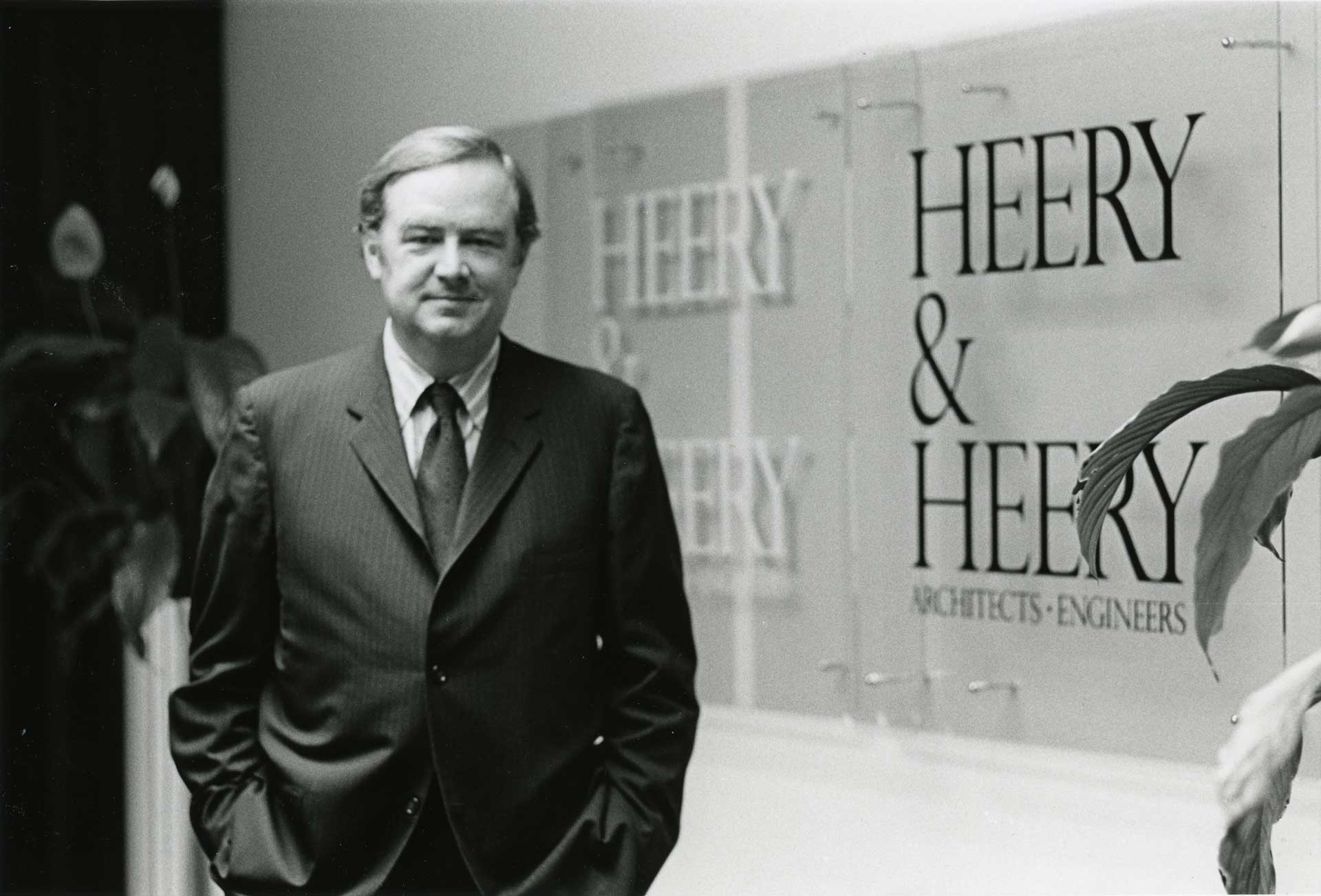
Having enlisted in the U.S. Navy in late 1944 at age 17, George T. Heery served in the Pacific in 1945 and 1946. Thus, he was a veteran of World War II when he attended Georgia Tech. He graduated in August of 1950 with a Bachelor of Science and then in June of 1951 with a Bachelor of Architecture. He worked with the Atlanta firms of Moskowitz Willner & Milkey Architects (during summers) and then with Finch & Barnes Architects after graduation.
As a World War II veteran, he had an abbreviated apprenticeship requirement and, therefore, in September 1951, he was able to obtain his license to practice architecture (Georgia architectural registration number 797). In June 1952, George formed his own Atlanta based architectural firm in affiliation with his father's practice in Athens, Georgia.
In 1954, George Heery and Wilmer Heery merged their separate but affiliated firms, thereby unifying the firm of Heery & Heery, Architects. With offices in Athens and Atlanta the firm grew quickly and soon added engineering disciplines. The firm pioneered many techniques to improve project performance in the areas of design quality, schedule, and cost control.
Heery & Heery, Architects & Engineers was incorporated in 1958. Wilmer served as the firm's Chairman/CEO until 1962. George became CEO in late 1962.
In the mid-1960s the firm opened an office in New York. In late 1960s and early 1970s, the firm experienced significant growth throughout the United States and eventually changed its corporate name to Heery International, Inc., with its subsidiaries being: Heery & Heery Architects, Heery Engineering, Heery Interiors, Heery Graphics, Heery Energy Consultants and Heery Associates (which would later become Heery Program Management).
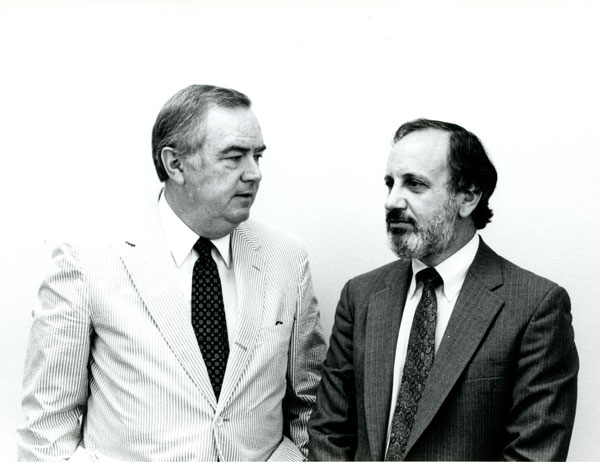
Under George Heery's leadership as well as that of Vic Maloof, Ennis Parker and others, the firm grew to become the largest and one of the more innovative architectural firms in the southeastern United States. Throughout the 1960s the firm added additional engineering disciplines, including civil, structural, electrical, mechanical and plumbing. The firm emerged as a national industry leader in a several fields including construction program management, architecture, engineering, interior architecture, graphic design and energy consulting.
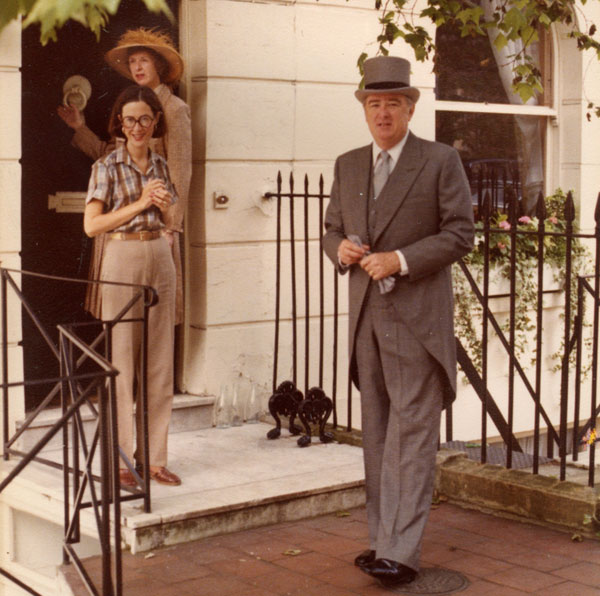
In the 1970s, the firm expanded internationally with projects in the United Kingdom, Greece, Jordan and Germany. The firm established a principal office in London in 1976.
Leading the firm’s international expansion, George Heery resided in the UK from 1978-1980 and, thereafter, continued to commute from the US to the UK on a regular basis through most of the early 1980s. During this time, Ennis Parker and Vic Maloof continued to be two of the firm's Atlanta based senior managers, with Ennis serving as President of Heery International, and Vic serving as President of its subsidiary, Heery Program Management. Brinton Smith also joined the firm during this period.
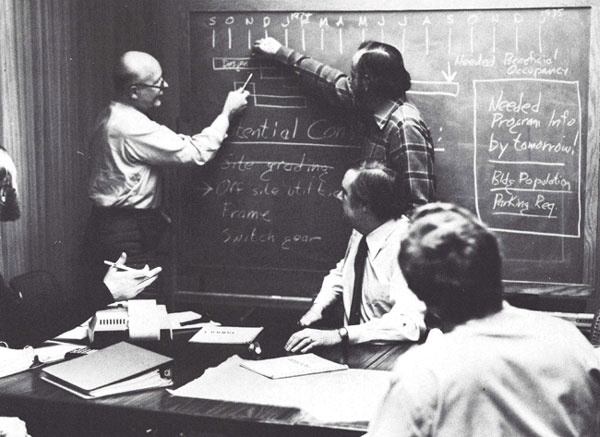
Throughout the 1970s, George Heery and his colleagues also began developing and refining a hybrid method for organizing the roles of architects, engineers and contractors, an approach for which his son, Shepherd, would later suggest the name “Bridging” (www.bridgingmethod.com).
During the early 1980s, George's four children became minority stockholders of Heery International. George's oldest son, architect, Shepherd Heery, served on the firm's Board of Directors. At the time Shep served as an outside Director of Heery International, he also was an executive with Gerald D. Hines Interests, based in the San Francisco Bay Area. George's daughter, Laura, was with the New York architectural firms of Pei Cobb & Freed and, later, with Philip Johnson and John Burgee.
In the mid 1980s, Heery International was approached by several firms with an interest in making a strategic acquisition. Eventually, the shareholders of Heery International reached an agreement with British Insulated Callender Cables (BICC), the parent company of general contractor Balfour Beatty.
In early 1986, BICC acquired full ownership of Heery International. Brinton Smith, Vic Maloof and George Heery were among the senior managers of the firm who continued with Heery International for several years following the acquisition.
Under the sale agreement George Heery agreed to stay on as CEO for two years. At the end of that time Balfour Beatty requested that he remain for another year, which he did. He was 60 years of age at the time, and his objectives were to work with his eldest son, Shepherd, and his daughter, Laura, in establishing multiple practices under the banners of Brookwood, Satulah and Wakefield.
George, Shepherd and Laura had begun planning throughout most of 1988 for the start-up of the new companies. Laura had recently left the New York firm of John Burgee with Philip Johnson, and she focused on business planning and marketing efforts for the planned new companies. By early 1989, George had completed his three year commitment to continue as CEO of Heery International.
With the founding of the Wakefield Group of Companies in the spring of 1989, Shep resigned from Gerald D. Hines Interests where he had worked since 1982 in the Oakland and San Francisco offices of the Houston based investment/development firm.
—————
In March of 2026 Brookwood Group was acquired by Zero RFI Inc., which is led by KP Reddy. As a result, the company is now in a period of rapid growth and has expanded capabilities, dramatically enhanced and enabled by leading-edge technologies.